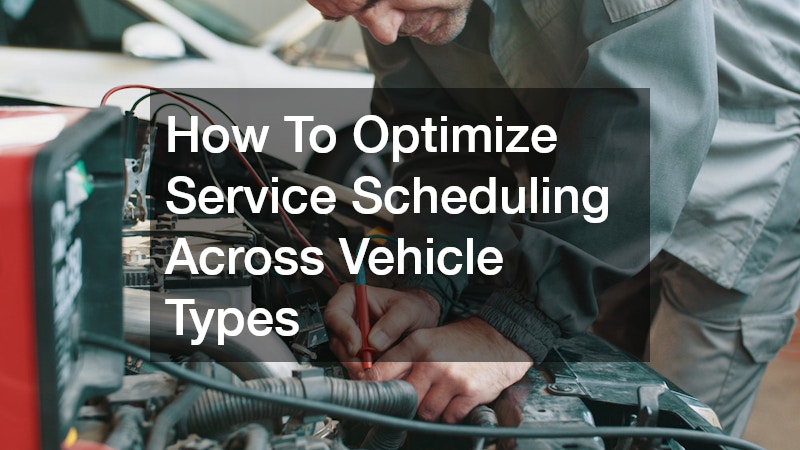
Scheduling maintenance across different vehicle types has become one of the most complex operational challenges for modern service organizations. Whether a business manages consumer vehicles, industrial fleets, aviation assets, or specialized transport equipment, the underlying issue remains the same: every asset has unique maintenance needs, timing constraints, and operational dependencies.
The problem is no longer just about “booking a service appointment.” It’s about coordinating systems, people, parts availability, downtime windows, regulatory requirements, and unpredictable breakdowns—all while ensuring that operations continue running smoothly.
As organizations scale, they often discover that disconnected scheduling systems lead to inefficiencies such as overlapping service windows, underutilized technician capacity, and unexpected operational delays. The solution lies in building structured, data-informed scheduling systems that treat maintenance as a unified operational ecosystem rather than isolated tasks.
This guide explores how to build and optimize service scheduling across diverse vehicle types. It breaks down actionable strategies for centralization, predictive planning, communication, logistics alignment, and scaling—so you can reduce downtime and improve long-term operational efficiency.
1. Building a Unified Maintenance Scheduling Framework
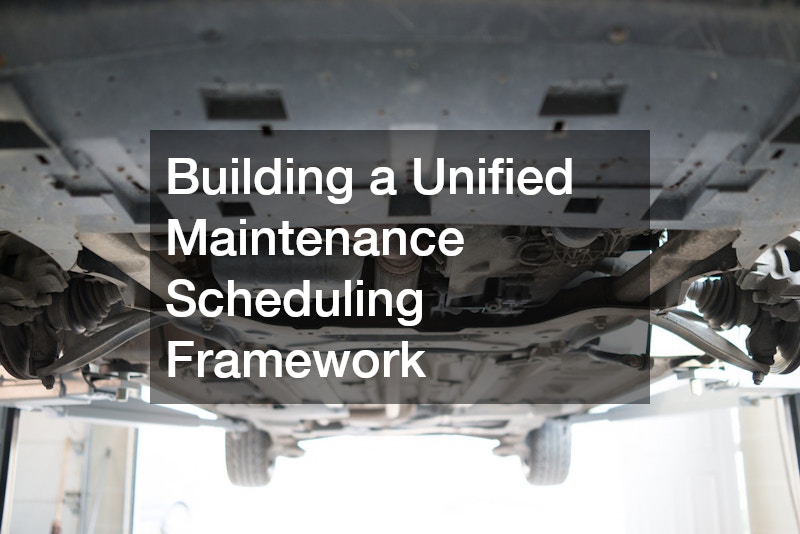
One of the most common mistakes in multi-vehicle operations is managing each service category in isolation. Without a unified framework, scheduling becomes reactive instead of strategic. This often leads to duplicated maintenance efforts, uneven workload distribution, and increased downtime because teams are not working from a shared operational picture.
A centralized system allows organizations to view all maintenance activity in one place, enabling better forecasting and resource allocation. When all service requests flow through a single framework, decision-makers can quickly identify bottlenecks, anticipate demand spikes, and allocate technicians more effectively across different vehicle types and service demands.
For example, businesses that manage both consumer and industrial fleets often integrate scheduling processes involving auto repair services and coordination with engineering companies to ensure technical consistency across operations. This integration helps ensure that diagnostic standards, repair procedures, and quality control measures remain consistent regardless of where or how the service is performed.
Key steps to build a unified framework:
- Consolidate all maintenance requests into a single scheduling platform
- Standardize service categories across all vehicle types
- Assign priority levels based on operational impact
- Align technician availability with cross-functional skills
- Integrate inventory and parts tracking into scheduling logic
- Establish clear approval workflows for high-cost or emergency repairs
Beyond these steps, organizations should also implement real-time reporting dashboards that allow managers to monitor scheduling performance metrics such as turnaround time, technician workload balance, and repeat repair frequency.
Benefits:
- Reduced scheduling conflicts
- Improved technician utilization
- Faster turnaround times
- Better long-term maintenance forecasting
- Increased transparency across departments
- More accurate budgeting for maintenance operations
A unified framework ensures that scheduling decisions are based on system-wide efficiency rather than isolated department needs. It also creates a foundation for scalability, allowing organizations to expand operations without losing control over maintenance quality or scheduling accuracy.
2. Standardizing Preventive Maintenance Across Specialized Vehicles
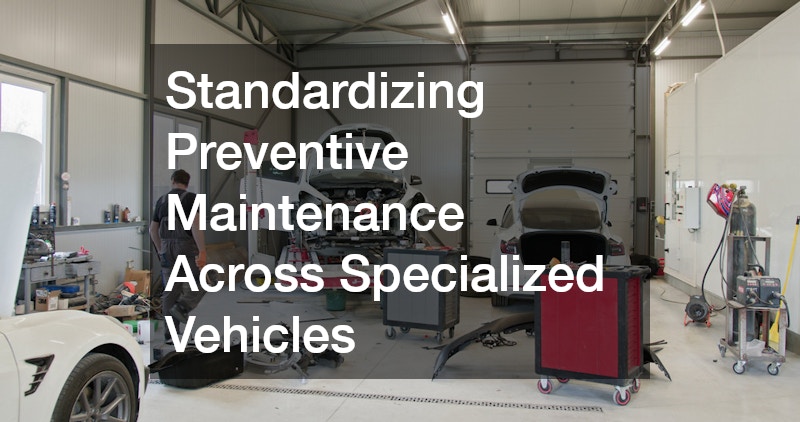
Preventive maintenance is essential for minimizing unexpected breakdowns, but different vehicles require different service cycles. Standardization helps reduce complexity while maintaining flexibility. Without a structured approach, organizations often end up over-servicing some assets while neglecting others, leading to inefficient use of resources and uneven equipment performance.
For example, recreational and specialty vehicles often require highly specific maintenance schedules. Vehicles using atv clutch kits require different inspection intervals than those undergoing airstream repair, even if they are managed within the same organization. These differences are driven by usage intensity, environmental exposure, and component wear rates, all of which must be factored into scheduling logic.
Best practices for standardization:
- Develop baseline maintenance intervals by vehicle category
- Adjust schedules based on real-world usage data
- Create condition-based triggers instead of fixed timelines
- Factor seasonal usage patterns into planning cycles
- Maintain a centralized service history for all assets
- Incorporate manufacturer recommendations alongside operational data
In addition, organizations should regularly review and refine these standards to reflect changes in usage behavior or equipment upgrades. Static maintenance schedules can quickly become outdated if they are not continuously validated against performance data.
Practical tips:
- Use color-coded maintenance tiers (low, medium, high urgency)
- Track failure rates by component type
- Group similar maintenance tasks to reduce downtime
- Schedule preventive work during low-demand operational periods
- Bundle inspections and repairs to maximize technician efficiency
- Use digital reminders tied to usage thresholds rather than calendar dates
Advanced teams also integrate telematics or sensor data to detect early warning signs of wear, allowing maintenance to be triggered dynamically rather than waiting for scheduled intervals. This approach significantly reduces unexpected breakdowns and improves asset longevity.
Standardization reduces guesswork and ensures that all vehicles receive appropriate attention without overloading service capacity, while still allowing enough flexibility to accommodate the unique demands of specialized equipment.
3. Optimizing Energy and Fuel-Based Service Coordination

Fuel availability and delivery logistics play a major role in service scheduling, especially for fleets and remote operations. Poor coordination can result in downtime even when mechanical service capacity is available. In many cases, vehicles are technically ready for service, but cannot move or operate efficiently due to fuel constraints, creating unnecessary delays that ripple through the entire scheduling system.
Organizations that rely on fuel delivery service systems often integrate them directly into scheduling platforms. In addition, mobile fuel service solutions allow for on-site refueling, minimizing interruptions during maintenance cycles. When these systems are properly coordinated, fuel logistics become a supporting function rather than a bottleneck.
Optimization strategies:
- Align fueling schedules with maintenance appointments
- Track fuel consumption patterns across vehicles
- Schedule refueling before long maintenance downtime periods
- Use mobile fueling for remote or high-mobility assets
- Combine fuel and service visits where possible
- Integrate fuel alerts into maintenance dashboards
Beyond these strategies, organizations can improve efficiency by analyzing fuel burn rates to predict which vehicles will require servicing sooner. Vehicles that show irregular fuel consumption patterns may indicate underlying mechanical issues that should be addressed during scheduled maintenance.
Operational advantages:
- Reduced vehicle downtime
- Fewer unnecessary service interruptions
- Improved fleet readiness
- Lower logistical overhead
- Better coordination between operational and maintenance teams
- Increased predictability in service scheduling windows
Advanced systems also incorporate automated fuel tracking sensors and telematics to trigger scheduling updates in real time. This allows teams to proactively adjust maintenance plans based on actual fuel usage rather than estimates, improving both accuracy and efficiency.
Integrating fuel logistics into maintenance planning ensures vehicles are always service-ready without delays caused by energy shortages. When fuel coordination is fully embedded into scheduling systems, it becomes a key driver of operational stability rather than an afterthought.
4. Coordinating Air-Based Maintenance and Scheduling Constraints

Aviation-related maintenance introduces strict regulatory requirements and time-sensitive scheduling constraints. These systems must balance safety compliance with operational availability. Unlike ground-based vehicles, aircraft maintenance cannot be delayed or improvised without significant risk, which makes planning accuracy absolutely critical.
Organizations often work with aviation consultants to ensure maintenance schedules meet regulatory standards while minimizing downtime. Meanwhile, aircraft rentals can provide temporary operational continuity when primary aircraft are under maintenance, helping operators avoid disruptions in service delivery or logistics operations. This flexibility is especially important for commercial fleets that must maintain strict flight schedules.
Key considerations:
- Strict adherence to inspection intervals
- High regulatory compliance requirements
- Limited maintenance facility availability
- Weather and operational constraints
- Safety-critical documentation requirements
- Aircraft-specific component lifecycles and replacement schedules
In addition, aviation scheduling must account for airspace restrictions, runway availability, and airport congestion, all of which can impact when maintenance can realistically be performed. Even when maintenance capacity is available, operational windows may not align with regulatory clearance or flight schedules.
Actionable strategies:
- Schedule inspections during low-flight demand periods
- Maintain backup aircraft availability when possible
- Use predictive maintenance data for early intervention
- Coordinate maintenance windows with operational planning teams
- Pre-book hangar space to avoid facility bottlenecks
- Align maintenance with mandatory regulatory inspection cycles
Organizations should also implement digital compliance tracking systems that automatically log inspection results, technician certifications, and maintenance approvals. This reduces administrative delays and ensures audit readiness at all times.
Effective aviation scheduling requires precision, foresight, and strong coordination between technical and operational teams. When executed properly, it not only ensures safety compliance but also maximizes aircraft availability, reduces grounding time, and improves overall fleet efficiency in highly regulated environments.
5. Aligning Large-Scale Transport and Freight Maintenance Cycles
Freight and rail systems require highly synchronized maintenance scheduling to avoid disruptions across entire logistics networks. Even small delays can cascade into significant operational bottlenecks.
Organizations that depend on freight solutions and railroad services must coordinate maintenance windows carefully to ensure continuous movement of goods.
Best practices:
- Align maintenance with off-peak transportation periods
- Segment fleets into rotating service groups
- Monitor wear patterns across transport routes
- Schedule preventative servicing during predictable downtime windows
- Use real-time tracking systems for maintenance visibility
Key benefits:
- Reduced network disruptions
- Improved asset lifecycle management
- More predictable logistics planning
- Increased system reliability
In freight and rail operations, scheduling is not just about maintenance—it is about protecting entire supply chains from disruption.
6. Prioritizing Emergency and High-Impact Service Requests
Not all maintenance tasks can be planned in advance. Emergency breakdowns require flexible scheduling systems that can adapt in real time without collapsing the overall workflow.
A strong prioritization system helps organizations determine which assets must be serviced immediately and which can be delayed.
Effective prioritization methods:
- Categorize issues by operational impact level
- Maintain emergency service capacity buffers
- Use real-time monitoring systems for early detection
- Establish rapid-response technician teams
- Implement dynamic rescheduling rules
Common priority tiers:
- Critical: Immediate operational failure
- High: Significant performance degradation
- Medium: Scheduled soon but operationally stable
- Low: Routine maintenance
A structured prioritization model ensures emergencies are handled efficiently without overwhelming the entire scheduling system.
7. Strengthening Communication Across Maintenance Teams
Even the best scheduling system fails without effective communication. Misalignment between technicians, dispatch teams, and operators leads to delays, duplicated work, and inefficient resource usage.
Communication improvements:
- Use centralized dashboards for real-time updates
- Standardize service request documentation
- Implement automated notifications for schedule changes
- Establish clear escalation protocols
- Conduct regular cross-team coordination reviews
Practical benefits:
- Fewer scheduling errors
- Faster response times
- Improved accountability
- Better coordination between departments
Clear communication transforms scheduling from a static plan into a responsive system that adapts to real-world conditions.
8. Leveraging Data and Predictive Maintenance Insights
Data-driven scheduling is one of the most powerful tools for optimizing service operations. By analyzing historical maintenance records, organizations can predict failures before they happen.
Data-driven strategies:
- Track recurring maintenance patterns
- Analyze failure rates by vehicle type
- Identify seasonal breakdown trends
- Use predictive analytics tools for forecasting
- Integrate sensor data for real-time monitoring
Key advantages:
- Reduced unexpected downtime
- Lower maintenance costs
- Improved asset lifespan
- More accurate scheduling forecasts
Predictive maintenance shifts scheduling from reactive problem-solving to proactive system optimization.
9. Scaling Scheduling Systems for Multi-Asset Operations
As organizations grow, scheduling complexity increases exponentially. Systems that work for small fleets often break down when scaled without structural improvements.
Scaling strategies:
- Standardize processes across all locations
- Automate repetitive scheduling tasks
- Implement role-based access for scheduling systems
- Expand technician training for cross-vehicle expertise
- Use cloud-based platforms for centralized visibility
Challenges to address:
- Inconsistent scheduling practices across regions
- Data fragmentation between systems
- Increased coordination complexity
- Resource allocation inefficiencies
Scaling successfully requires both technological infrastructure and disciplined process management.
Optimizing service scheduling across different vehicle types is not simply a matter of better planning tools—it requires a complete shift in how maintenance is structured, communicated, and executed. In many organizations, the biggest inefficiencies don’t come from a lack of software or staffing, but from fragmented decision-making and disconnected workflows that prevent teams from seeing the full operational picture.
The most successful systems share several key characteristics:
- Centralized visibility across all assets
- Predictive, data-driven decision-making
- Strong communication between teams
- Flexible prioritization for emergencies
- Scalable infrastructure that grows with operations
When these elements are properly integrated, maintenance shifts from a reactive, task-based function into a coordinated operational system. Centralized visibility ensures that decision-makers can see the status of every vehicle in real time, regardless of type or location. Predictive analytics further strengthen this by identifying patterns before failures occur, allowing teams to schedule maintenance proactively rather than waiting for breakdowns.
Strong communication between departments eliminates delays caused by misaligned expectations or incomplete service requests. It also ensures that technicians, dispatchers, and managers are working from the same set of updated information. Meanwhile, flexible prioritization allows organizations to respond quickly to unexpected issues without disrupting the entire schedule.
Finally, scalability ensures that as fleets grow or diversify, the scheduling system can expand without losing efficiency or accuracy. When all of these components work together, organizations achieve not just better scheduling—but a fundamentally more resilient and efficient maintenance operation that can adapt to increasing complexity over time.